There was a season when I knew I wanted a meaningful home life, but the days still felt a little shapeless. I felt kind of lost, not quite sure what I should be doing.
I was not trying to be careless. I was not trying to avoid discipline. I just did not yet know how to give the day a clear form.
I think this is where many mums get stuck, especially if they are new to homemaking or have been very relaxed and child-led. They do not want to be harsh or rigid, so the day stays very open. But after a while, that openness can start to feel more like drift than peace.
You can be intentional, and still have peace.
Mini Contents
- Why some days can feel shapeless at home
- What I wanted structure to do for our family
- The weekly rhythm we keep coming back to
- What our stay-home mornings look like
- Why art is part of our ordinary rhythm
- What lunch, nap time, and one-on-one time look like
- Why our late afternoons are more relaxed
- How visual planning helps the children participate
- If you want to build more structure into your days, start here
Why some days can feel shapeless at home
One of the hardest things about a day with no clear rhythm is that you can feel busy without feeling grounded.
The children are awake. Meals still need to happen. The home still needs care. You may have beautiful intentions for reading, art, prayer, table work, or time outside. But if nothing has a natural place in the day, it can all remain vague.
Either nothing gets done, or they kind of get done and you’re not sure if you’ve achieved what you wanted.
That usually creates problems like:
- not knowing what to move to next
- feeling like you are always deciding from scratch
- meals getting pushed later than they should
- beautiful things like books, music, or art being treated as extras
- children becoming more restless because the day feels unclear
It can also leave the mother carrying the whole plan invisibly in her head.
What I wanted structure to do for our family
What I wanted was not a rigid timetable.
I wanted a rhythm that could train the body and the mind.
For the body, structure helps children learn things like:
- when we rest
- when we eat
- when we go out
- when we return and reset
For the mind, structure creates opportunities to practise:
- focus
- attention
- stillness
- observation
- self-control
- bringing the will under good direction
I think that matters deeply.
When a child learns to be still enough to notice what is in front of him, humble enough to really observe it, and patient enough to work through something carefully, that is already education.
That is already habit training. That is already character formation.
So for me, structure is not about control for its own sake. It is about building habits, virtues, and peace into the feel of everyday family life.
The weekly rhythm we keep coming back to
At the weekly level, I have found it helpful to think in terms of stay-home days and going-out days.
Usually we have:
- two stay-home days and three going-out days
- or three stay-home days and two going-out days
That alone gives the week more shape.
I am not trying to make every day do everything.
Stay-home days usually hold more space for our slower beauty subjects, art, and deeper home rhythms. Going-out days hold more outdoor time, errands, and change of environment.
That helps me stop expecting the same pace from every day.
What our stay-home mornings look like
On stay-home days, the morning is usually where we have more breathing room.
Because we are not rushing out, we can have:
- a slower breakfast
- prayer together
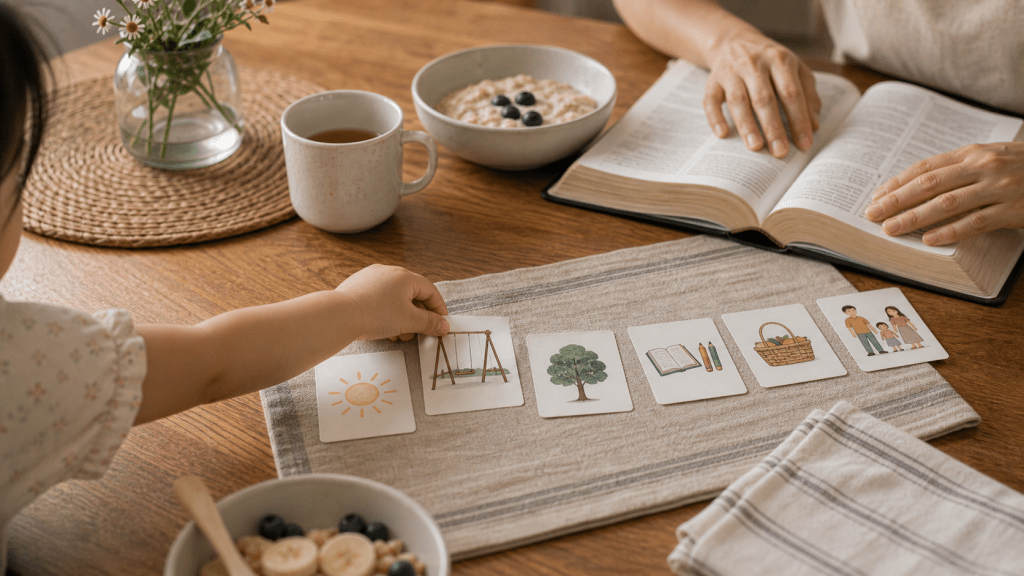
- time in the Word
- Bible reading
- picture study
- time with a hymn we are learning
- nursery rhymes or folk songs
This is usually how I like to connect with the children first.
We begin as a family. Then when my husband heads out, we continue in that spirit. It is not only about information. It is also about beauty, memory, atmosphere, and shared attention.
I do not treat these things as decorative extras.
They are part of the shape of the day.
Why art is part of our ordinary rhythm
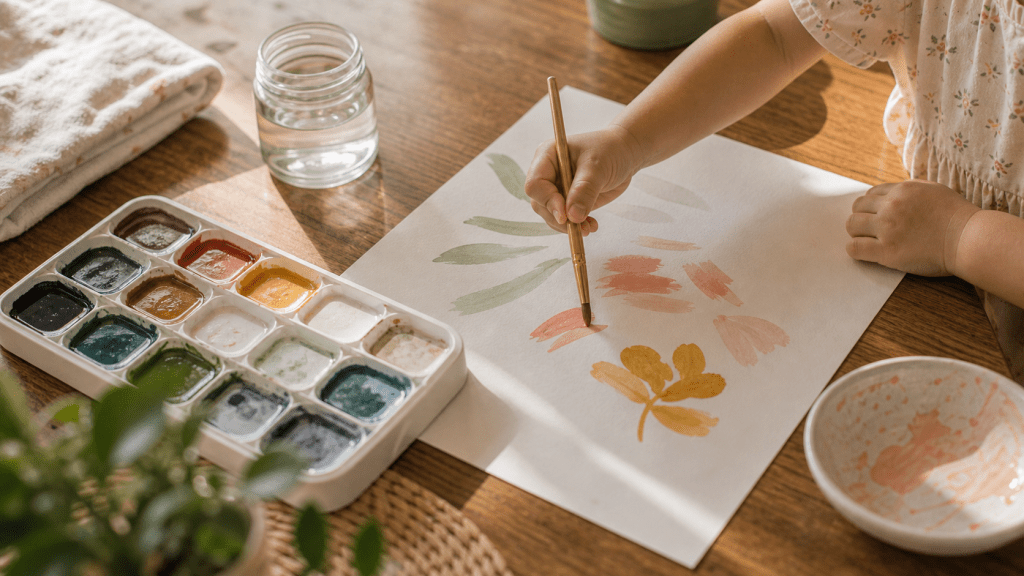
After that, I often set up the art table.
Sometimes it is a simple invitation. Sometimes it is freer. Sometimes it leads into observation, conversation, and technique.
Art matters to me not only because it gives the child a chance to express himself.
I include it because it is building other things too:
- fine motor skills
- familiarity with the tools
- comfort with materials
- patience
- perseverance
- resilience
- integrity in work
- a spirit of excellence
It also helps the child appreciate the difficulty behind what an artist makes.
When a child begins to see that a brush can make thick or thin marks, that a medium has limits, that colour mixing takes attention, or that some things do not work the first time, he is learning more than “art.”
He is learning to respect process.
That is one reason I care about having an art space at home. It is not just for output. It is for cultivation.
Sometimes I simply observe. Sometimes I show a technique. That may look like:
- showing how a round brush can make thin strokes and thick strokes
- demonstrating how to hold and manipulate a tool
- introducing colour mixing
- teaching primary and secondary colours
- helping the child notice what the material is doing
If you want a fuller art-focused version of this conversation, I would also read How to Start Sensory Play and Art at Home Even If You Feel Overwhelmed.
What lunch, nap time, and one-on-one time look like
One thing I appreciate about stay-home days is that they give me more room to prepare ahead.
While the children are occupied with art or freer play, I may:
- season two to three meals at a time
- put ingredients into the cookers
- prepare parts of lunch
- set up the next part of the day
Then I come back and observe the children again.
This is often when I can help a child go a bit deeper with a tool or material if that seems timely.
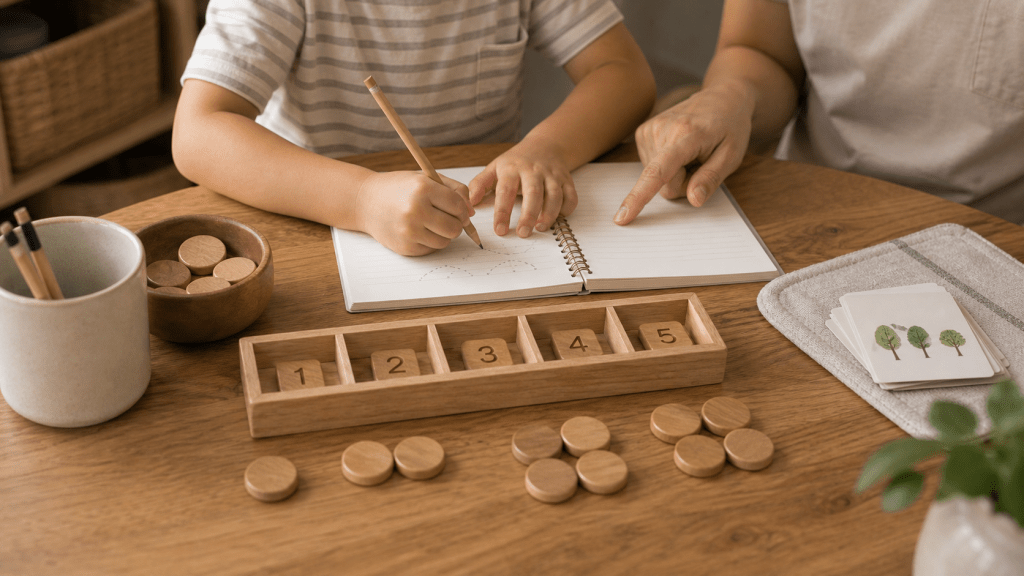
Before lunch, we may also do some simple table work for language or math.
Then we have lunch, and after that the younger ones usually go down for a nap.
That nap window gives me time for more intentional one-on-one work with the older one. Depending on the day, that may mean:
- more direct phonics teaching
- more intentional math
- reading Chinese books with the reading pen
- simply having more focused connection with her
I try to hold both things together:
- making room for her own lead and interests
- also using the quieter window for what is harder to do when the younger ones are awake
Why our late afternoons are more relaxed
By late afternoon, I usually want the day to open up a bit more.
When the younger ones wake up, we may:
- do a few chores
- head to the playground
- have freer play
- move gradually toward dinner
That part of the day is usually more relaxed.
Woven into the ordinary day is chores. My kids help with laundry, meals, cleaning up the space because I believe it’s as much their home as it’s mine.
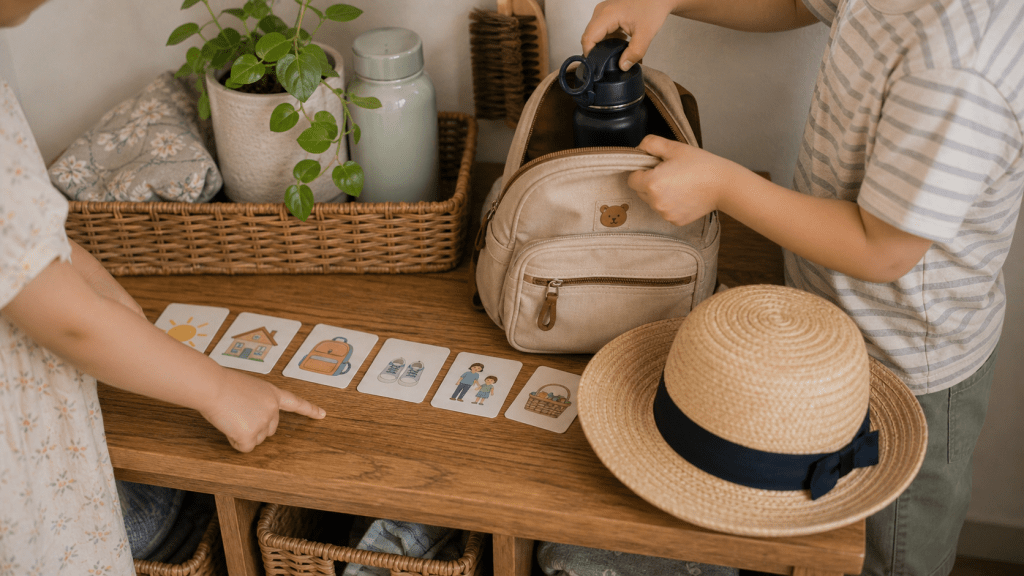
I use the tools from Involving the Children at Home: Printable Pack to teach them:
- how to plan the week
- be responsible for packing their bags for the next day
- cooking simple meals
You can read about HOW I actually get them involved here.
Part of a healthy rhythm is knowing where the tighter anchors belong and where the day can breathe more.
How visual planning helps the children participate
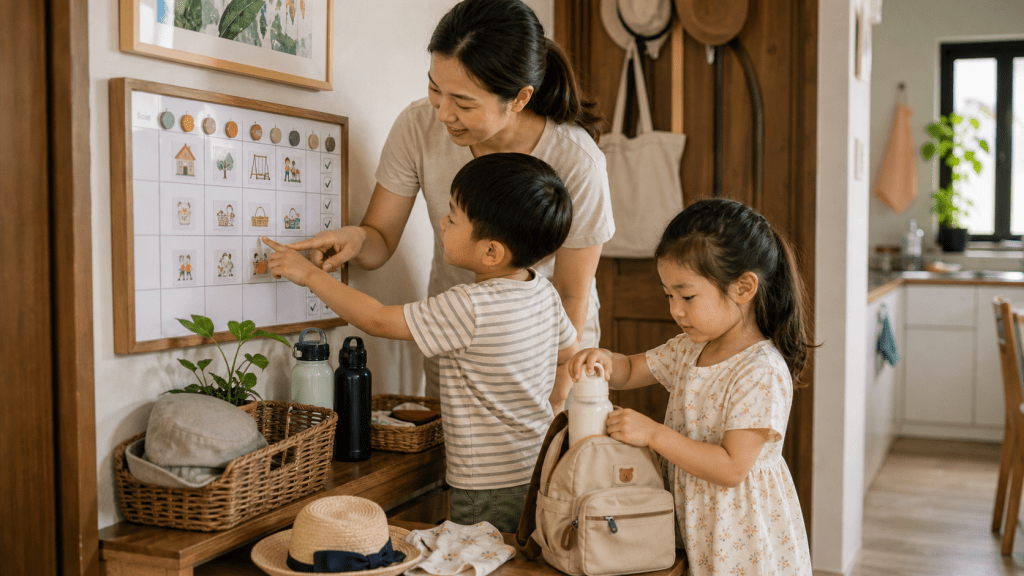
One thing that helps structure feel more shared is making it visible.
The children can participate much more easily in a rhythm they can see.
That is why I find visual planning so helpful.
At the weekly level, we can look together at:
- which days are stay-home days
- which days are outing days
- when we are meeting friends
- when we are going for sand play
- when we may be going somewhere like a museum
That gives the week a more understandable shape for the child.
And it is not only about activities.
It also helps with preparation.
When the children can see the week and help think about what is coming, they begin learning:
- anticipation
- planning
- preparation
- shared responsibility
The same is true for grocery preparation.
A child-friendly shopping checklist can help children notice what foods we are running low on and take part in preparing for the week. That turns grocery planning into something more visible and shared instead of something mum silently manages alone.
If you want to build more structure into your days, start here
If you currently feel lost in the day, I would not start by building a minute-by-minute schedule.
I would start by building anchors.
You could begin with reflection questions like:
- Which two or three parts of the day most need more shape?
- Do I need more structure in the morning, the afternoon, or the week as a whole?
- Which days should be stay-home days and which should be going-out days?
- What is one morning practice I want to repeat consistently?
- What is one beauty subject or meaningful habit I want to make more ordinary?
- Where could art, reading, prayer, or table work naturally live?
- Which part of meal prep could happen earlier on stay-home days?
- What part of the rhythm could my children understand more easily if they could see it?
Then I would choose:
- one weekly rhythm
- one morning anchor
- one stay-home practice
- one visual planning page
That is enough to begin.
If you want help making this kind of planning more visible, the Involving Children At Home: Printable Pack includes a weekly family calendar, picture cards for the week, a weekly shopping checklist, and child-friendly shopping pages so the children can participate more in preparing for the rhythm of the week.
Related Posts
- How I Feed a Family of 5 Healthy Home-Cooked Meals Without Spending All Day in the Kitchen
- How I Involve My Kids in Chores and the Values I Want Them to Learn
- Homeschool Preschool & Kindergarten: What to Prioritize
Affiliate note: If you buy something through our links, we may earn an affiliate commission at no cost to you. We only recommend products we genuinely like. Thank you so much.
 Thriving New Mama
Leave a comment