Cabin fever? Cranky kids? When Singapore’s haze keeps us indoors, the days can feel long. What if some of that time became a chance to play, learn, grow and enjoy one another?
I’m Shereen, a counsellor and mum of three young children. I help mums navigate the personal and relationship changes of motherhood through counselling, practical guides and better communication skills.
Here are eight ways we’ve spent time together at home. These are things we’ve explored over time, rather than a schedule for one day. You can pick one that suits your children’s interests and the energy you have today.
1. Look at beautiful art and learn about artists
We explored Beatrix Potter’s illustrations and looked closely at beautiful art prints. We talked about what we noticed, then read biographies about her life, scientific interests and conservation work.
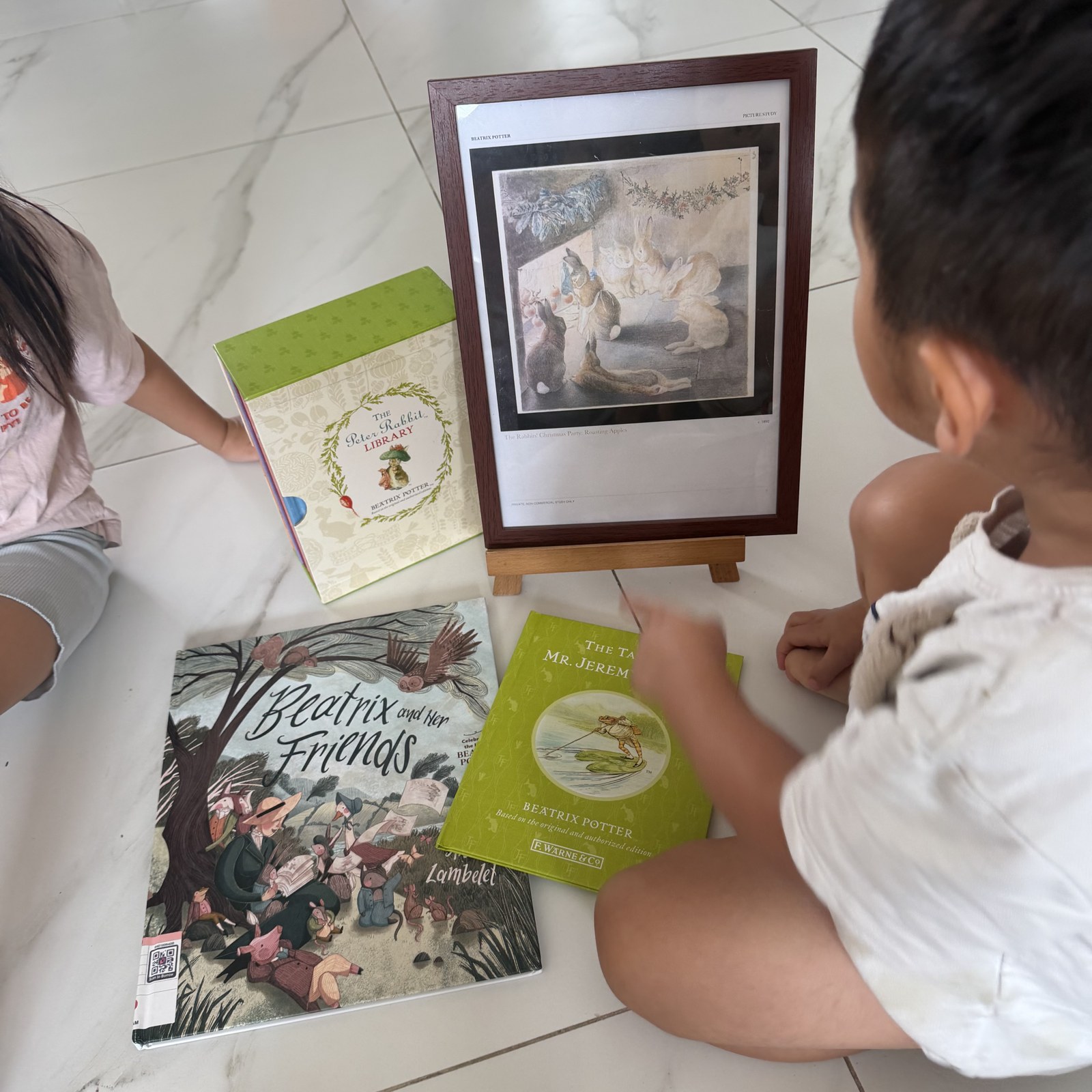
You could start with one picture. Give your children time to look before asking a simple question: “What do you notice?” They might spot a tiny animal, a colour or something happening in the background. Let their answers guide the conversation.
If you’d like more pictures to explore, the V&A’s Beatrix Potter collection is an additional resource.
Books to look up at NLB:
- Beatrix Potter, Scientist — Lindsay H. Metcalf, illustrated by Junyi Wu.
- Beatrix and Her Bunnies — Rebecca Colby, illustrated by Caroline Bonne-Müller.
- Saving the Countryside — Linda Elovitz Marshall, illustrated by Ilaria Urbinati.
- Beatrix and Her Friends — Anne Lambelet.
2. Read aloud together
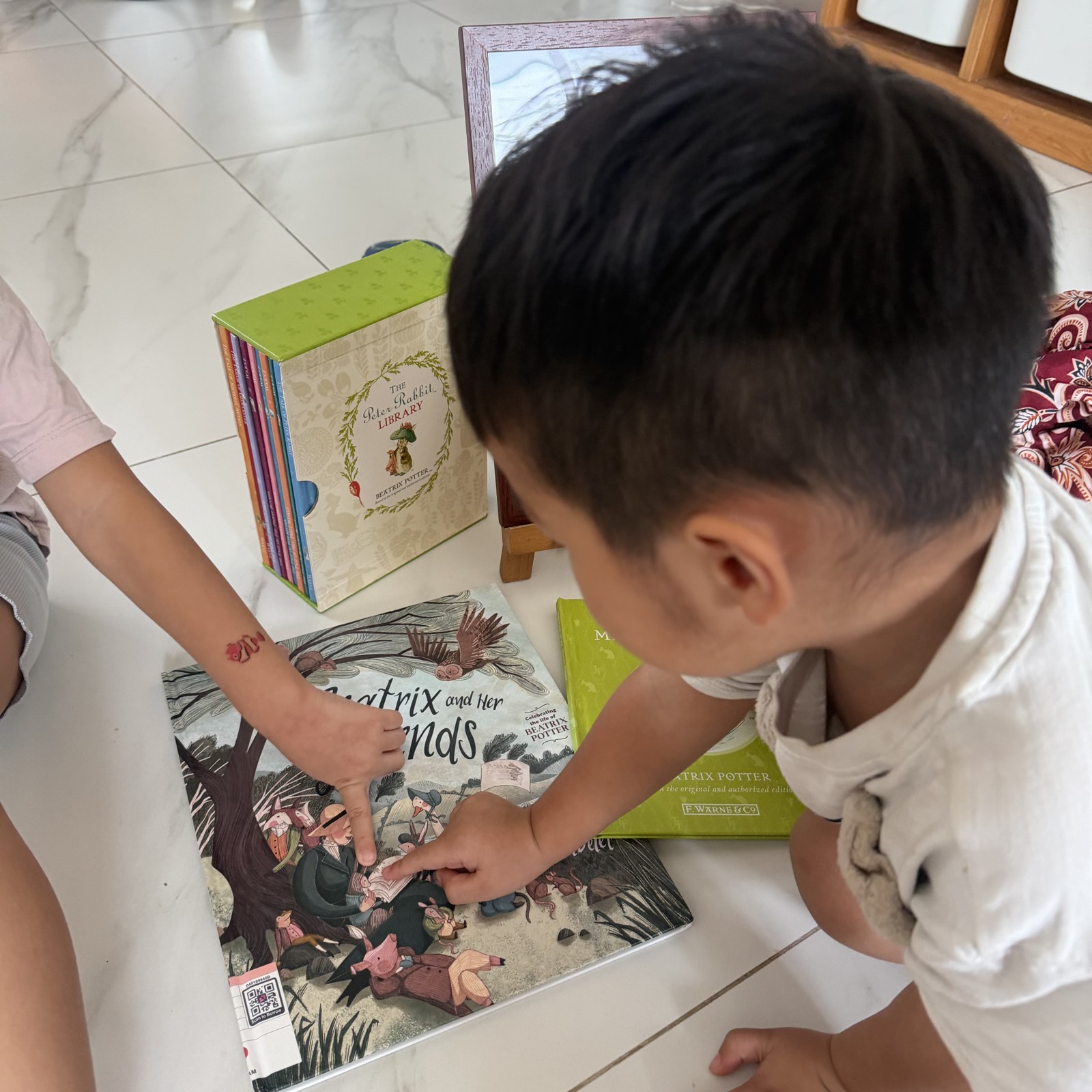
We read picture books and biographies, including the story of Virginia Lee Burton and her books. Reading about the person behind a story gives us something else to talk about when we return to the pictures and words.
Choose a book you’d enjoy reading, too. You could read a few pages, pause to look at an illustration, or follow a question your child asks. There’s no need to finish every book in one sitting.
A related NLB book: Big Machines: The Story of Virginia Lee Burton — Sherri Duskey Rinker, illustrated by John Rocco.
3. Listen to music and explore the world
We used Maestro Classics’ Mike Mulligan and His Steam Shovel to explore music alongside the story.
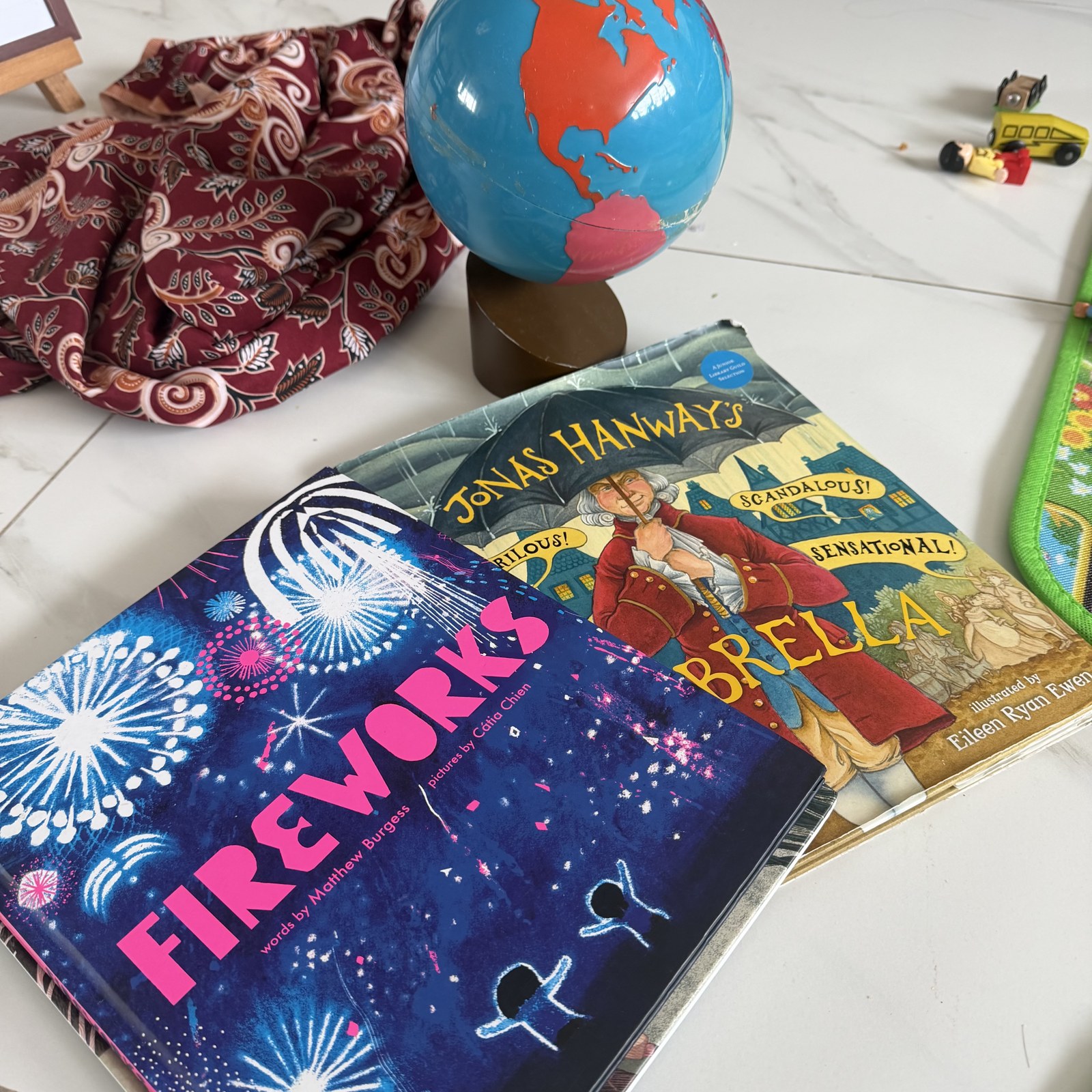
We also listened to Handel, found London on a globe and talked about other things associated with London. My Name Is Handel: The Story of Water Music is the related Maestro Classics resource.
You could listen to a short section, find a place on a map and see what questions come up. A book about umbrellas or fireworks could be another direction to explore. These are related reading suggestions:
- Jonas Hanway’s Scurrilous, Scandalous, Shockingly Sensational Umbrella — Josh Crute.
- Fireworks — Matthew Burgess, illustrated by Cátia Chien.
4. Become little scientists
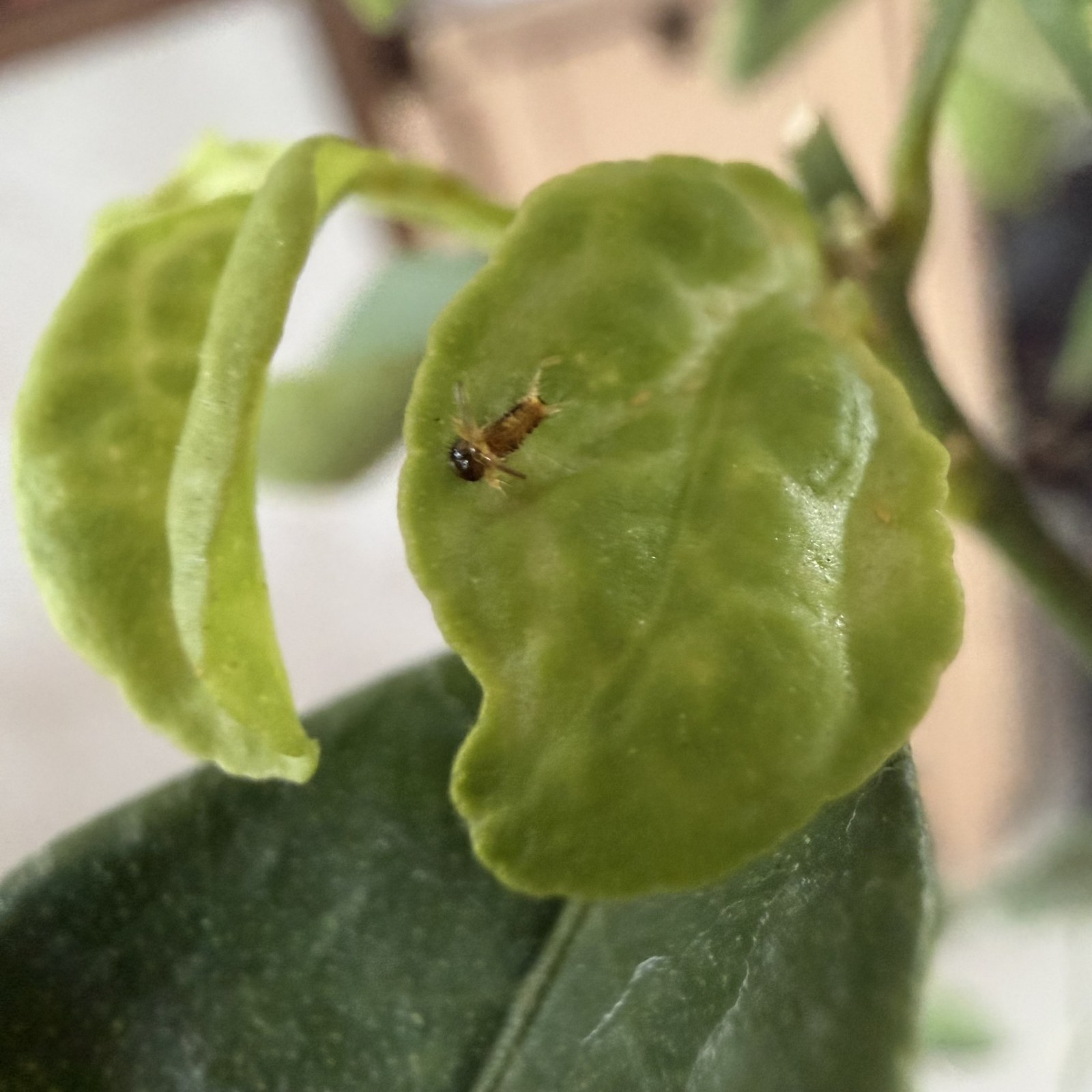
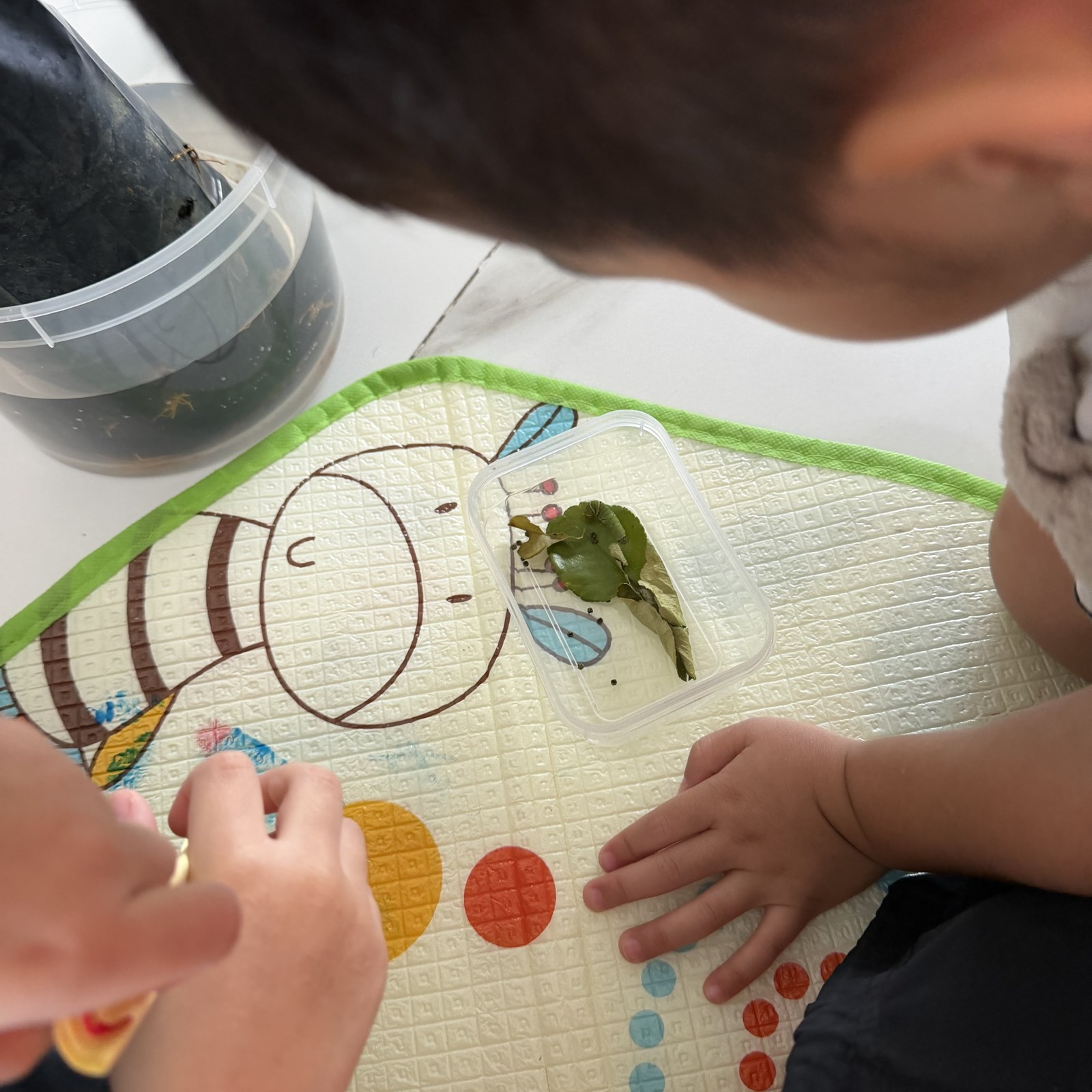
We observed caterpillars growing on our lime plants. The children watched how they moved, noticed changes in colour, observed when and how often they fed, and recorded what they saw. We also studied and identified different leaves.
For a simple version at home, look closely at a leaf you already have. Compare its shape, edges and veins with another one. Your child could draw what they notice, while you help write down their words. Avoid handling unknown plants or insects.
Kew’s learning-at-home resources offer extra ideas if your children want to keep exploring plants. Save outdoor collecting for when the air quality allows it.
5. Learn a new skill together
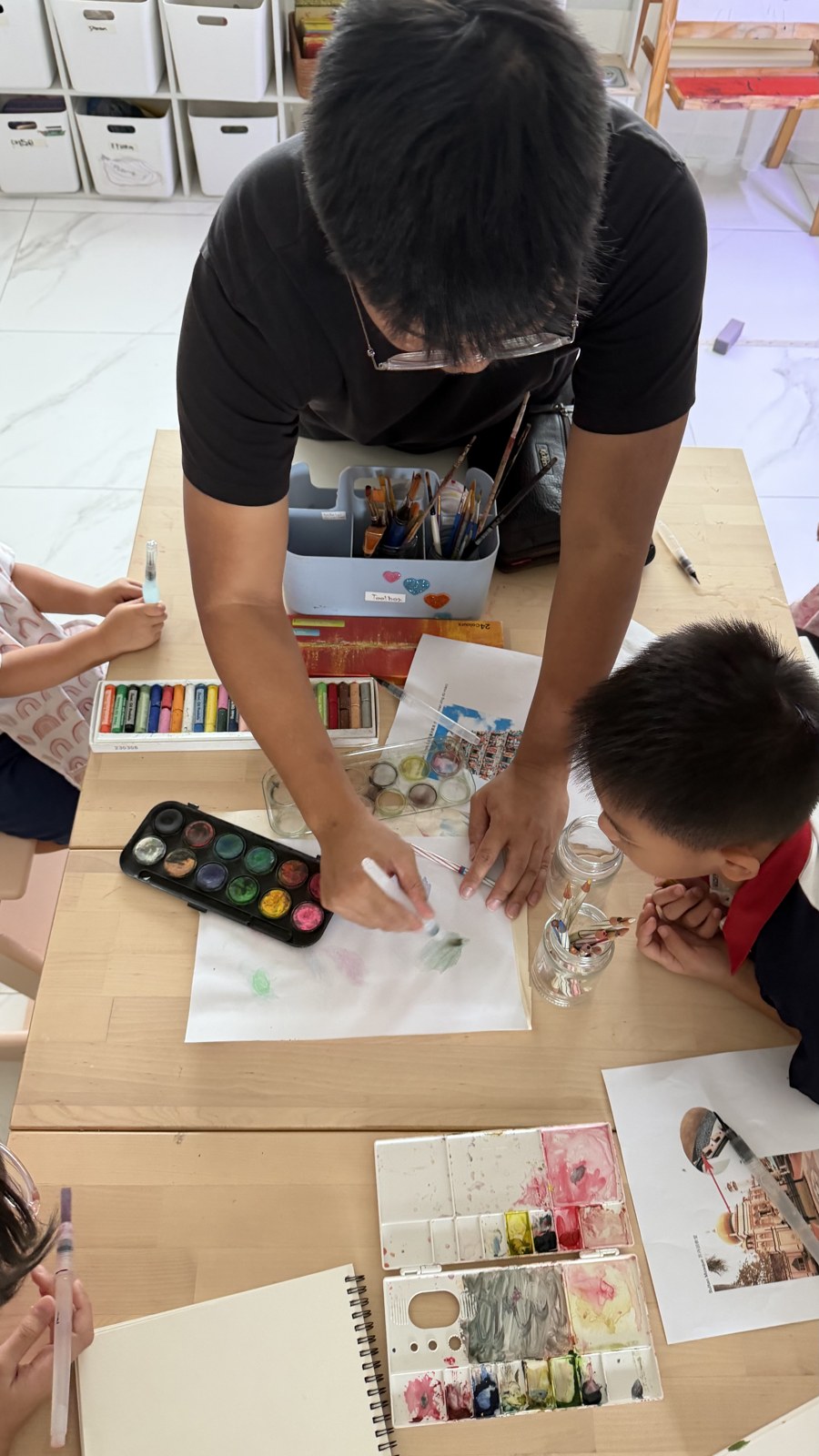
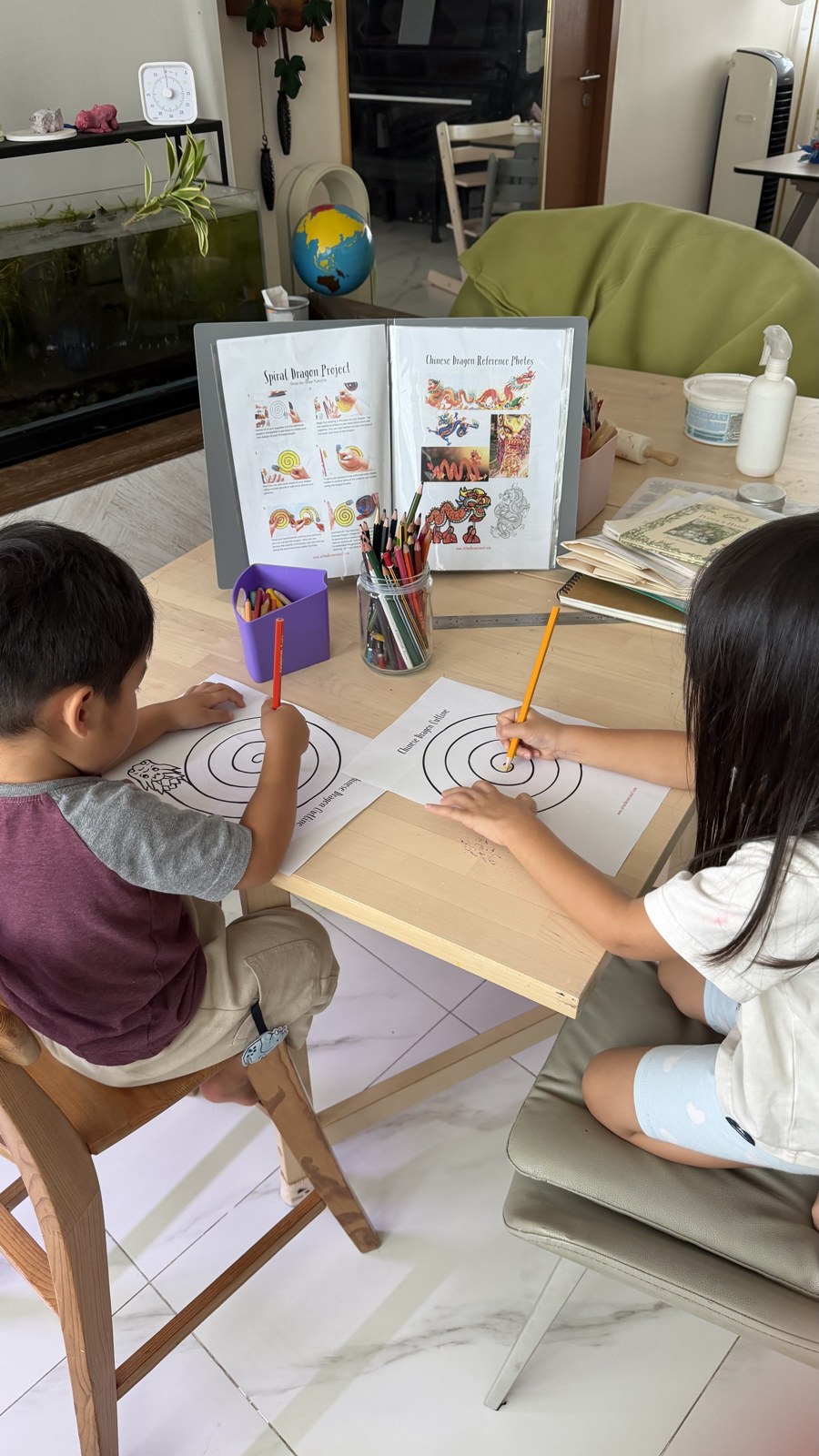
We practised watercolour painting, experimented with colours and learnt simple painting techniques together.
You could begin with paper, a brush, water and a few colours. Try adding more water to a colour, then less. See what happens when two colours meet. Let your children explore without needing to make a particular picture.
Learning alongside them also gives you something to do together when you’re spending more time at home. For more ideas on getting started, I’ve shared how to start sensory play and art at home.
6. Make and fix useful things
We worked on restoring a broken microscope and built a DIY air purifier. Both gave us something practical to work on together.
Children can join in with small parts of a task, such as sorting safe materials, measuring or passing something to an adult. Keep electrical work, sharp tools and repairs that need specialist skills with a capable adult.
If you’re considering an air-cleaner project, read the EPA’s DIY air-cleaner guidance first. It explains design limits and fan safety. The EPA generally prefers commercial units with a known clean air delivery rate, which helps you choose one for your room size.
Everyday tasks offer chances to work together, too. I’ve written about how I involve my kids in chores and the values I want them to learn.
7. Invite people over
We hosted people at home and made time for connection, conversations and playdates.
If travel conditions and everyone’s health allow, you could invite a friend or another family over for a simple visit. A few familiar toys or books can give the children somewhere to begin while the adults catch up.
Keep the visit manageable for your household. It could be short, and you can agree on an easy time to finish. Think about what would help you enjoy the company as well as what the children might enjoy.
8. Follow children’s curiosity
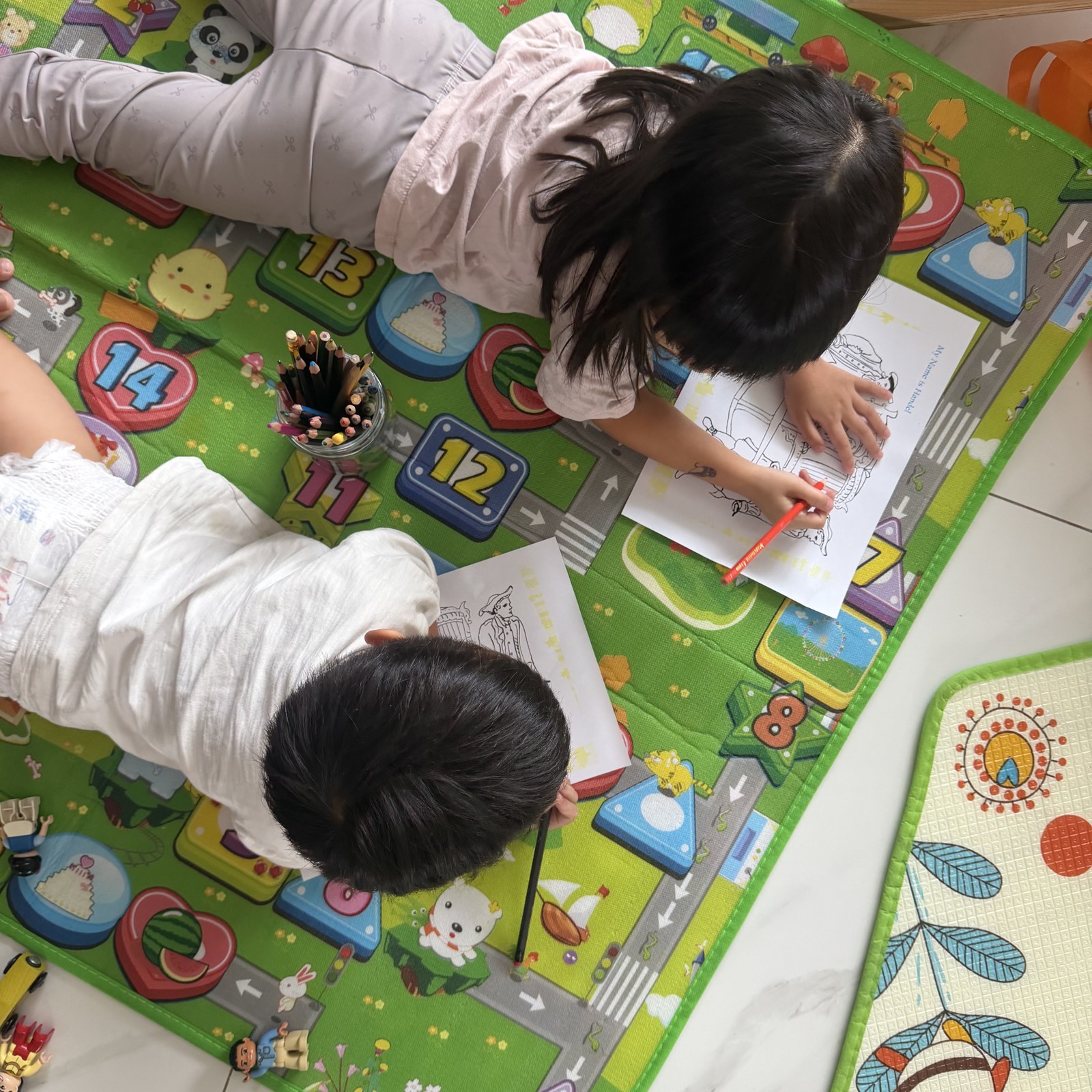
These activities can lead naturally into one another. In our family, art sat alongside books about Beatrix Potter. Music connected with finding London on a globe. Watching caterpillars gave the children things to notice and record.
You don’t need to map out every step before you begin. Start with a picture, a story or a question. If your child wants to look closer, you can look together. If they’re ready to move on, you can leave it there and return another time.
For more reading, try NLB’s OneSearch. Search by title, author or whatever topic has caught your child’s interest. Check current availability before making a library trip.
A quick note about haze safety
Check NEA’s haze readings and advisories or the myENV app when planning activities. Follow the current advice for children and anyone with heart or lung conditions. These ideas work for ordinary days at home, too; they don’t depend on a particular haze reading.
When outdoor air quality worsens, reduce haze entering your home by closing doors and windows, while keeping the room comfortably cool. Ventilate when conditions improve and use a suitable air purifier. See NEA’s indoor-air guidance. If a child feels unwell, seek medical advice; MOH’s haze guidance has further information.
Before You Go
Choose one idea that feels manageable today. You might read a picture book, put out the watercolours or listen to some music together. There’s room to enjoy something small and leave the rest for another day.
Save this list for your next day indoors, or share it with a parent who’s looking for ideas.
About Shereen: I’m a counsellor, mum of three and the person behind Thriving New Mama. I support mums through the personal and relationship changes of motherhood with counselling, practical guides and better communication skills.


Leave a Reply